



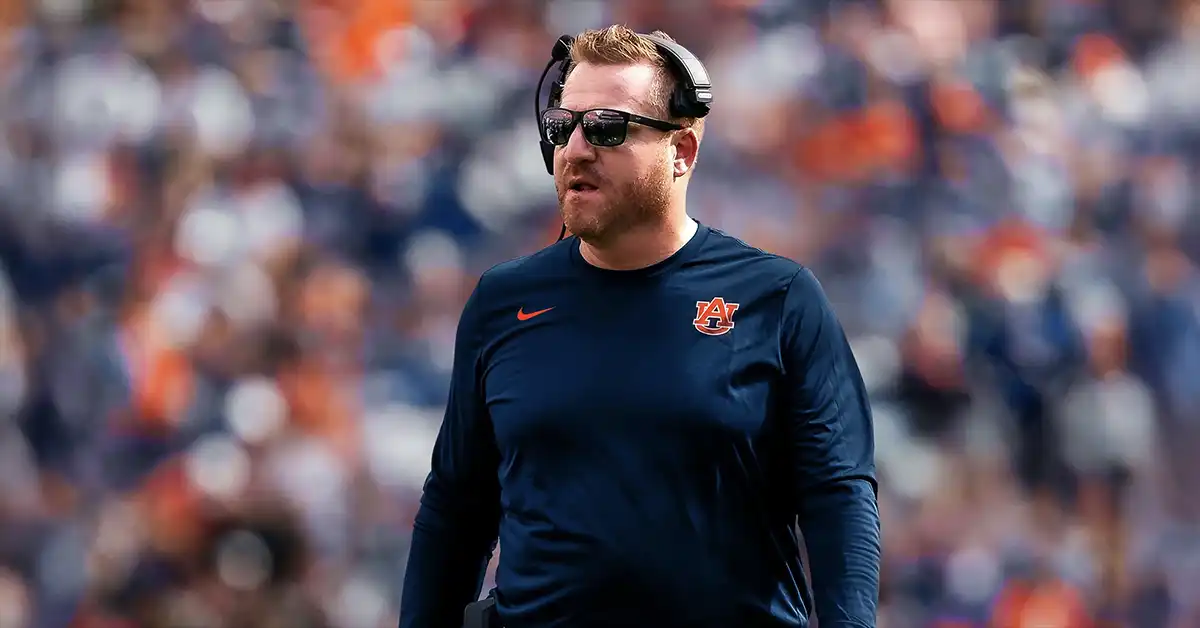
Image source: auburntigers.com
When Alex Golesh took over at Auburn, the first headlines weren’t glowing. Within days, more than two-thirds of the Tigers’ blue-chip talent reportedly hit the transfer portal, and fan favorites — including five-star wideout Cam Coleman — headed elsewhere. For a program used to flexing recruiting power, the early roster shake-up looked like a warning sign.
But not everyone sees an emergency in progress. Analyst Josh Pate has pushed back on the panic, pointing to what he calls a modern transfer portal lesson from Indiana head coach Curt Cignetti. As Pate put it, some traditional SEC voices used to scoff at bringing in Group of Five talent. According to Pate, the thinking was essentially, “We’re Auburn. We don’t need G5 players.” Cignetti’s response, Pate joked, was simply: watch.
To understand the comparison, you have to rewind to Indiana’s situation before Cignetti arrived. The Hoosiers were sinking fast in 2022 and even made NCAA history — not the good kind — by becoming the first Division I team to hit 700 all-time losses. Then Indiana hired Cignetti, whose résumé came with one loud warning shot: “Google me, I win.”
According to multiple reports, Cignetti didn’t attempt a slow rebuild. He attacked the portal and leaned heavily on trusted Group of Five players, including a wave from his former program, James Madison University. More than a dozen JMU standouts followed him to the Big Ten and many jumped straight into major roles. Star QB Fernando Mendoza was also a portal pickup. The results were instant — Indiana went from cellar-dweller to playoff contender, and now sits one win away from a national title.
This offseason alone, the Hoosiers have pulled in double-digit portal additions, including wide receiver Nick Marsh, running back Turbo Richard, and edge rusher Tobi Osunsanmi. Cignetti summed up his philosophy bluntly after Mendoza won the Heisman, saying, “We are not going to recruit selfish guys or guys that don’t want to pay the price.”
That mindset is exactly why some believe Golesh stands to gain from Cignetti’s success. Auburn has lost more than 30 players, but the new coach appears to be trimming with intention rather than signaling surrender. His system features tempo, spacing, and quarterback mobility — which explains why USF quarterback Byrum Brown followed him to Auburn. Brown isn’t just a depth piece; in 2025 he was the only FBS quarterback to throw for 3,000 yards and rush for 1,000 in the same season.
The Tigers are still dealing with the fallout of Hugh Freeze’s departure and a 5–7 finish, and stars like Coleman, Eric Singleton Jr., and Deuce Knight are headed out. But Golesh has been clear about the plan. He told reporters the rebuild has been “gloves off,” with a priority on the offensive and defensive lines. “Quarterbacks are important, skill guys are important,” he said, “but the offensive and defensive line is where you win and lose football games.”
Auburn has already secured 22 commitments and expects more before the portal window closes on January 16, 2026. Golesh said the Tigers are about halfway through their portal goals and will keep hunting for trench help.
If Cignetti ends up winning a national championship after flipping Indiana overnight, it sends one loud message: in 2026 college football, talent acquisition is no longer about where players come from — it’s about whether they fit. And if that lesson sticks, few coaches may benefit more than Auburn’s Alex Golesh.
FAQ:
Who is Alex Golesh?
Alex Golesh is the head football coach at Auburn University. Before joining Auburn, he served as the head coach at USF and built a fast-paced, offensive-focused program.
Why are so many Auburn players entering the transfer portal?
Many Auburn players, including several blue-chip recruits, entered the transfer portal shortly after Golesh took over. This roster turnover appears to be part of a larger rebuild, with Golesh reshaping the team to fit his system.
Who is Curt Cignetti and why is he mentioned in relation to Auburn?
Curt Cignetti is the head coach at Indiana University. He successfully rebuilt the Hoosiers through the transfer portal, bringing several Group of Five players who became major contributors. His success is used as a comparison for what Golesh could accomplish at Auburn.
Also Read: Sanders Goes All-In to Fix Colorado’s Defensive Issues


