



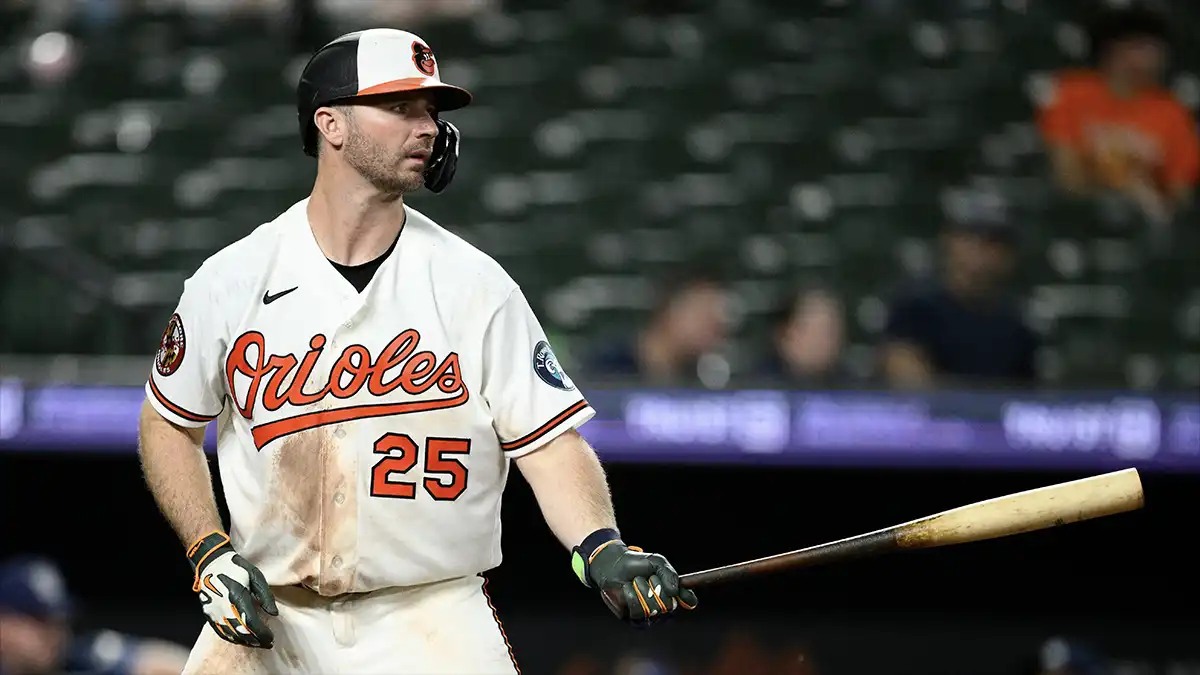
For a few seconds, Pete Alonso looked like he had delivered the biggest swing of the night for Baltimore. Then came the foul call — and the replay review that refused to change it.
With the Orioles and Yankees tied 3-3 in the bottom of the seventh inning, Alonso launched a Brent Headrick fastball deep down the left-field line. The drive traveled an estimated 410 feet at 107.1 mph and appeared to fly over and around the foul pole before landing on the walkway.
Third-base umpire Will Little ruled the ball foul. After a review lasting roughly one to two minutes, MLB upheld the decision.
For Baltimore, it was a painful reminder that sometimes even all the cameras in the stadium still cannot provide the one angle everyone wants.
Table of Contents
Replay Review Could Not Prove the Ball Was Fair
MLB’s Replay Operations Center said the available video angles could not definitively establish that Alonso’s shot crossed the foul pole in fair territory.
Because the evidence was not conclusive enough to overturn the original ruling, the foul call stood.
That distinction is important. Replay did not necessarily prove the ball was foul. Instead, officials could not find enough evidence to reverse Little’s call.
Alonso was understandably frustrated.
The Orioles slugger suggested MLB could borrow an idea from football by installing technology near the foul pole that would provide a direct view of the ball’s path.
“I think a simple fix is like football, you have the pylon camera with the plane,” Alonso said, explaining that a laser or camera pointed straight upward could potentially remove the uncertainty.
His argument was simple: MLB already uses advanced tracking systems, analytics and video technology. Why not use some of that technology for one of baseball’s most difficult calls?
Alonso and Bassitt Want Better Technology
Alonso also acknowledged MLB’s explanation that every ballpark has different dimensions, making a universal system more complicated.
Still, he believes the technology should be achievable.
Orioles pitcher Chris Bassitt was even more blunt when discussing why dedicated foul-pole cameras are not already standard.
According to Bassitt, the biggest obstacle is money. He argued that players, coaches and fans would all welcome additional cameras if MLB were willing to make the investment.
That debate will likely continue because the moment was too important to ignore.
Even Baltimore’s Albernaz pointed out that teams are already using sophisticated technology and AI-based tools. In his view, MLB has the technological ability to improve these situations, although he stressed that the disputed call was not the reason Baltimore ultimately lost.
Yankees Saw the Play Differently
The Yankees naturally had a different perspective.
Manager Aaron Boone said New York’s replay coordinator believed the ball was foul. Headrick, meanwhile, admitted that the call could have gone either way.
That may be the most fitting description of the entire play.
For Baltimore, it looked like a potential go-ahead homer. For New York, it was a foul ball. And for the replay officials, there simply wasn’t enough evidence to settle the argument.
Baseball fans, meanwhile, were left doing what baseball fans do best: debating one swing for what felt like an entire offseason.
Alonso struck out on the following pitch, ending the immediate threat.
Alonso Was Chasing a Major Milestone
The disputed drive carried extra significance for Alonso.
Earlier in the game, he had already hit his 29th home run of the season. Had the seventh-inning blast counted, he would have reached 30 homers and extended his streak to six consecutive full seasons with at least 30 home runs.
That would have been another impressive milestone for one of baseball’s most consistent power hitters.
Baltimore signed Alonso to a five-year, $155 million contract in December 2025 after he spent the first seven seasons of his MLB career with the New York Mets.
During his Mets tenure, Alonso hit 264 home runs and established himself as one of the game’s premier power threats.
The Orioles brought him in as a major piece of their long-term plans. Naturally, they would prefer his first season in Baltimore to include more celebration and fewer arguments about foul poles.
Orioles’ Playoff Hopes Leave Little Room for Error
The timing of the controversy made it even more frustrating.
Baltimore entered Thursday’s action with a 61-66 record and sat 1.5 games behind the Minnesota Twins for the final American League Wild Card position.
FanGraphs’ playoff models gave the Orioles roughly a 13.9% to 15.5% chance of reaching the postseason, depending on the model.
In other words, Baltimore cannot afford to waste many opportunities.
The Orioles cannot change the replay ruling, and there is no point spending the rest of the season staring at the foul pole. What they can control is what happens next.
Pete Alonso’s disputed seventh-inning drive became one of the night’s biggest talking points, but Baltimore’s season will ultimately be decided by much more than one replay review.
The Orioles remain within striking distance of the AL Wild Card race, although their margin for error is shrinking quickly. Alonso’s bat will be central to their hopes, especially with the slugger closing in on another 30-homer season.
For now, the home run that never counted will remain a frustrating “what if.” Baltimore’s best response is the simplest one: keep hitting, keep winning and make sure the playoff race does not come down to another trip around the foul pole.
FAQ:
Was Pete Alonso’s home run ruled foul?
Yes. Alonso’s seventh-inning drive was ruled foul by third-base umpire Will Little, and MLB replay review upheld the call.
Why didn’t MLB overturn Pete Alonso’s foul call?
Replay officials said they could not definitively determine that the ball crossed the foul pole in fair territory. Because there was not enough evidence to overturn the original ruling, the call stood.
How far did Pete Alonso’s disputed hit travel?
The ball traveled an estimated 410 feet and left Alonso’s bat at 107.1 mph.
Would Pete Alonso have reached 30 home runs?
Yes. Alonso had already hit his 29th homer earlier in the game. If the disputed seventh-inning shot had counted, it would have been his 30th home run of the season.
What did Pete Alonso say about the replay technology?
Alonso suggested MLB could use technology similar to football’s pylon cameras, such as a camera or laser aimed directly upward near the foul pole, to provide a clearer view.
What did Chris Bassitt say about MLB adding more cameras?
Orioles pitcher Chris Bassitt argued that players, coaches and fans would likely support additional cameras. He suggested the main issue was the cost of installing the technology.
Did the Orioles blame the controversial call for the loss?
No. Baltimore acknowledged that the play was important but did not claim the disputed call alone decided the game.
What was Baltimore’s playoff position?
The Orioles entered Thursday with a 61-66 record, sitting 1.5 games behind the Minnesota Twins for the final American League Wild Card spot.
How important is Pete Alonso to the Orioles?
Alonso is a major part of Baltimore’s long-term plans after signing a five-year, $155 million contract in December 2025. His power remains a key factor in the Orioles’ playoff hopes.
Could MLB change its replay technology in the future?
The controversy could add to calls for MLB to install more precise technology around foul poles. However, ballpark differences make creating a single system for every stadium more complicated.
Also Read: Is Bryce Harper’s Knee Injury Becoming a Bigger Phillies Problem?
👉 If you like our content, please click here and add us as your preferred source. It helps us a lot, and we are committed to delivering you the very latest sports news.


