



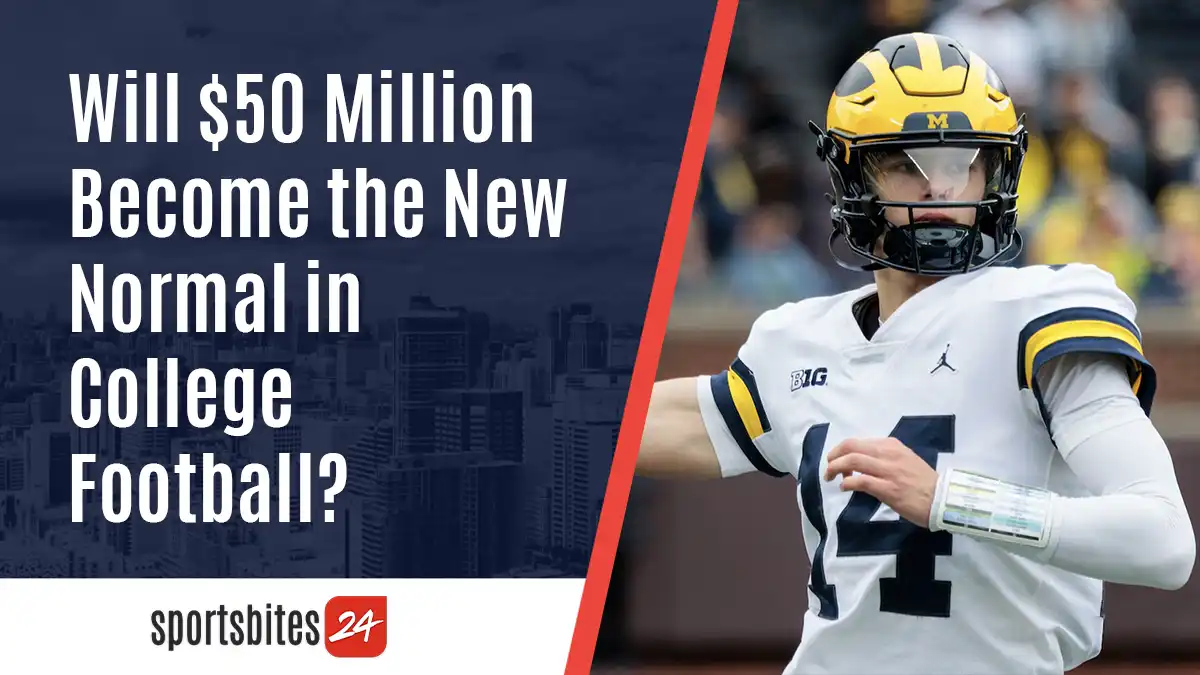
Image source: mlive.com
College football has entered a new era—and it’s not just about touchdowns anymore, it’s about dollar signs. Kyle Whittingham has thrown down a bold prediction that could shake all 137 FBS programs: building a top-tier roster might soon cost a jaw-dropping $50 million. Yes, you read that right. If that number doesn’t make athletic directors sweat, nothing will.
Table of Contents
The $50 Million Reality Check
Speaking about the future of roster building, Whittingham suggested that by 2027, elite programs may need to spend up to $50 million to stay competitive. Programs like Texas Longhorns and Ohio State Buckeyes are already pouring millions into their squads, with estimates around $40 million and $20 million respectively in recent seasons.
But here’s the catch—only a handful of schools can actually afford that level of spending. “A few can handle it, most can’t,” Whittingham noted, highlighting a growing financial gap. In simple terms: college football is starting to feel less like a sport and more like an arms race with very expensive ammunition.
Michigan’s Big Moves in the NIL Game
The Michigan Wolverines are not sitting quietly on the sidelines. Their NIL collective, Champions Circle, has been aggressive—and effective. One headline move included reportedly offering $12 million to flip quarterback Bryce Underwood from LSU Tigers.
That kind of spending shows how serious Michigan is about staying in the race. And honestly, in today’s market, if you’re not spending big, you’re probably falling behind. It’s like showing up to a Formula 1 race with a bicycle—good luck keeping up.
Transfer Portal Chaos and Rising Player Value
The transfer portal has added even more drama to the mix. Programs like Texas Tech Red Raiders and LSU have built strong rosters by offering competitive NIL deals.
Even players who haven’t played a single college snap—like Jackson Cantwell—are landing massive deals. That’s the new reality. If a player doesn’t like their deal, they can simply walk. No hard feelings—just business.
And yes, fans are watching this unfold like a reality show. “Who’s transferring next?” might soon rival game scores in popularity.
Calls for Rules—and a Bit of Nostalgia
With spending spiraling, coaches across the country are calling for structure. The NCAA has struggled to implement firm rules, and proposed solutions like the SCORE Act have stalled.
Even Donald Trump has weighed in, expressing interest in restoring a more traditional version of college sports. But let’s be honest—turning back time in a billion-dollar industry is easier said than done.
Meanwhile, players are cashing in. Cases like Diego Pavia have shown how NIL earnings can sometimes exceed early NFL paychecks. That’s a stunning shift in the sports economy.
Michigan’s Strategy: Building a Powerhouse Front Office
Behind the scenes, Michigan is reloading with experience. Whittingham has brought in top-tier personnel, including Berj Najarian, known for working alongside Bill Belichick, and Dave Peloquin, a veteran with deep college football roots.
Add to that Skylar Phan and longtime scout Chris Pettit, and it’s clear Michigan is building more than a roster—they’re building an empire.
Their 2027 recruiting class is already ranked among the Top 20, despite major staff changes. Not bad for a program in transition.
College football is changing fast, and money is now at the center of it all. Whittingham’s $50 million projection may sound extreme—but it’s quickly becoming realistic. Programs like Michigan are adapting, investing, and preparing for a future where financial power could define championships.
One thing is certain: the game isn’t just played on the field anymore—it’s also played in bank accounts. And right now, the highest bidder might just win it all.
FAQ:
Why are college football rosters becoming so expensive?
College football rosters are getting more expensive because of NIL (Name, Image, and Likeness) deals. Schools and collectives now offer big money to attract top players, which has increased overall spending.
What does the $50 million roster prediction mean?
The $50 million prediction suggests that by 2027, top programs may need to spend that much to build a competitive team. It reflects how fast NIL spending is growing in college football.
Which college football programs spend the most on NIL?
Programs like the Michigan Wolverines, Ohio State Buckeyes, and Texas Longhorns are among the biggest spenders in NIL deals.
How is NIL affecting college football recruiting?
NIL has made recruiting more competitive. Players often choose schools based on better financial offers, not just coaching or playing time.
Can smaller schools compete in the NIL era?
It is becoming harder for smaller schools to compete because they usually cannot match the financial power of top programs. This creates a growing gap in college football.
What role does the transfer portal play in NIL deals?
The transfer portal allows players to switch schools easily. If a player gets a better NIL offer elsewhere, they can transfer, making roster management more challenging.
Are college athletes earning more than NFL rookies?
In some cases, yes. Top college players can earn more through NIL deals than lower-round NFL rookies, which shows how valuable NIL has become.
Is there any regulation on NIL spending?
Right now, rules are limited. The NCAA has tried to create guidelines, but there is still no strong system to control spending.
What is Michigan’s Champions Circle collective?
Champions Circle is the NIL collective that supports the Michigan Wolverines. It helps fund deals for players and plays a big role in recruiting.
What could happen if NIL spending keeps increasing?
If spending keeps rising, only a few rich programs may dominate college football. This could reduce competition and change the balance of the sport.
Also Read: Did Firing Sherrone Moore Actually Save Michigan Money?
👉 If you like our content, please click here and add us as your preferred source. It helps us a lot, and we are committed to delivering you the very latest sports news.


